
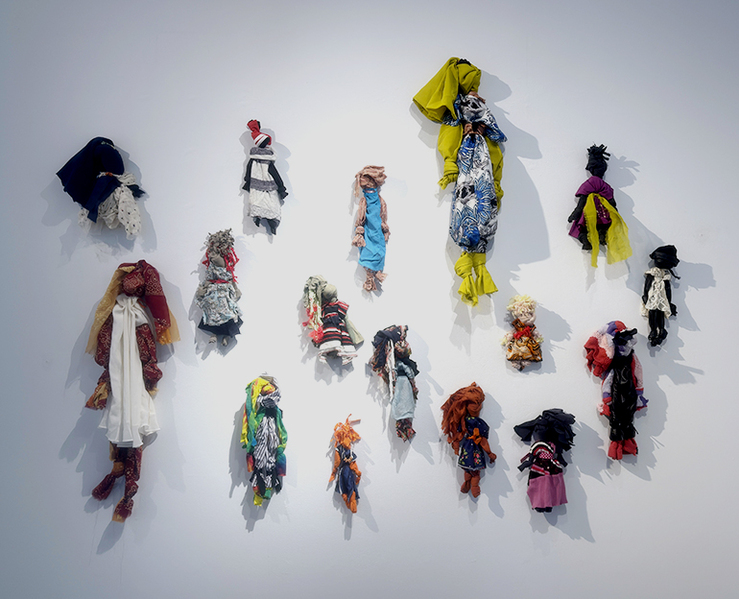
ABAYOMI, 2020
The dolls are inspired by the Afro-Brazilian tradition of Abayomi dolls, a folk craft believed to have originated during the transatlantic slave trade. According to oral history, enslaved African mothers tore strips from their garments and, using only knots, fashioned small dolls to comfort their children aboard slave ships.
Vieira began making during the COVID-19 pandemic, a period marked by profound uncertainty and the family separation policies associated with the Trump administration. Unable to focus on her studio practice, she turned to the intimate act of making rag dolls, tearing apart her own clothing and crafting each figure as a unique individual.
For Vieira, these dolls embody both tenderness and resilience. Their beauty lies in the way they bear witness to humanity's capacity to create care and hope in the darkest of circumstances. At the same time, their faceless forms—with no eyes, ears, or mouths—remain quietly unsettling, inviting reflection on identity, memory, and the countless lives erased from history.
The word Abayomi comes from the Yoruba language and is commonly translated as "the precious one" or "my precious meeting with you," underscoring the dolls' enduring symbolism of love, survival, and human connection.
TEXTILE ART

ABAYOMI
2020
Upcycled from the artist’s own clothing.
various sizes
2020
Upcycled from the artist’s own clothing.
various sizes


